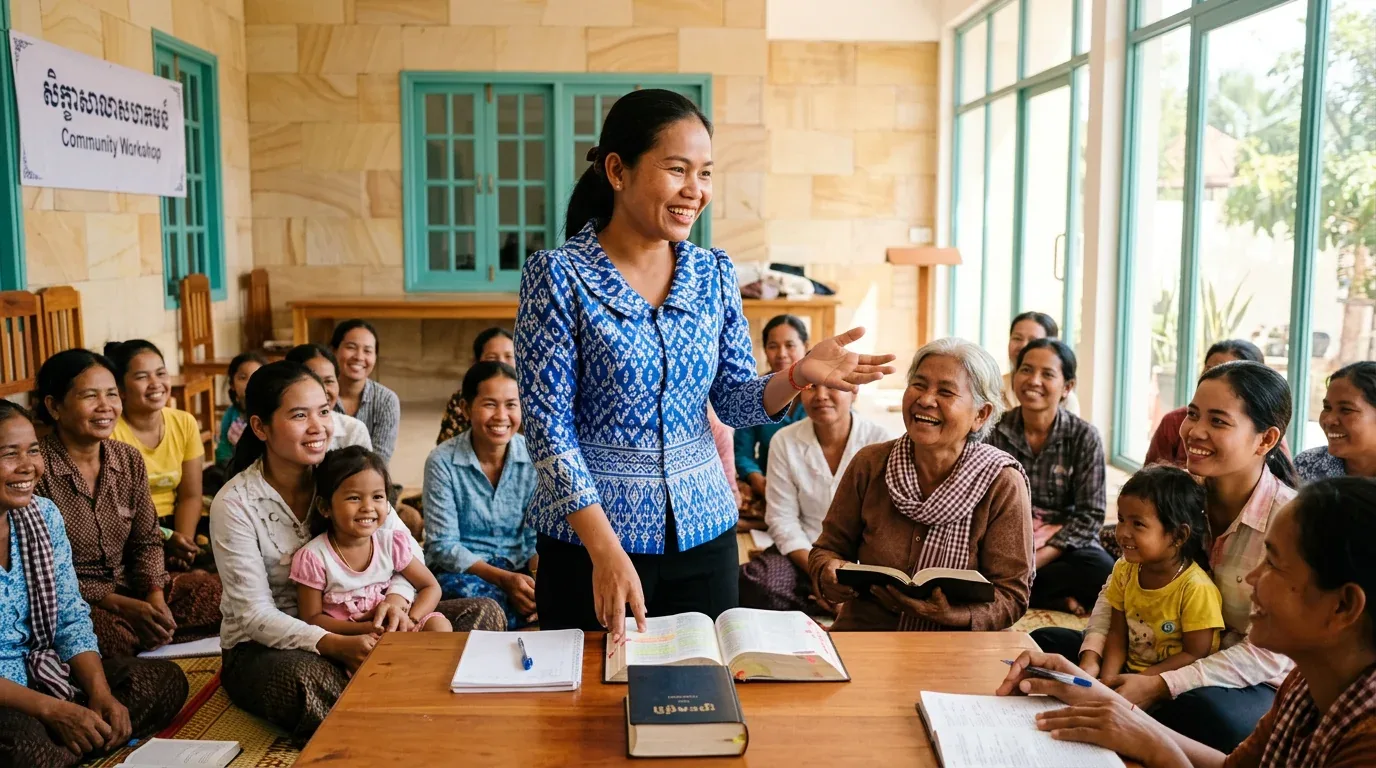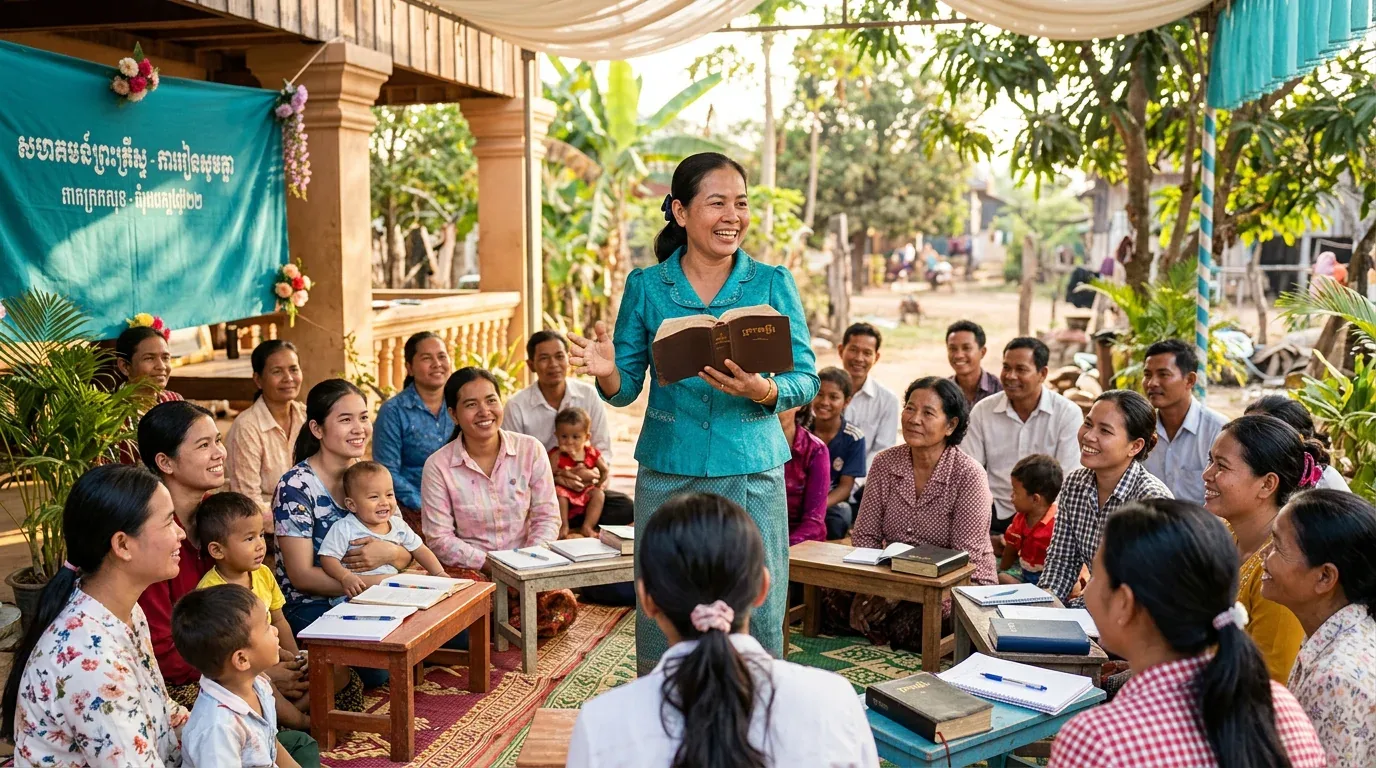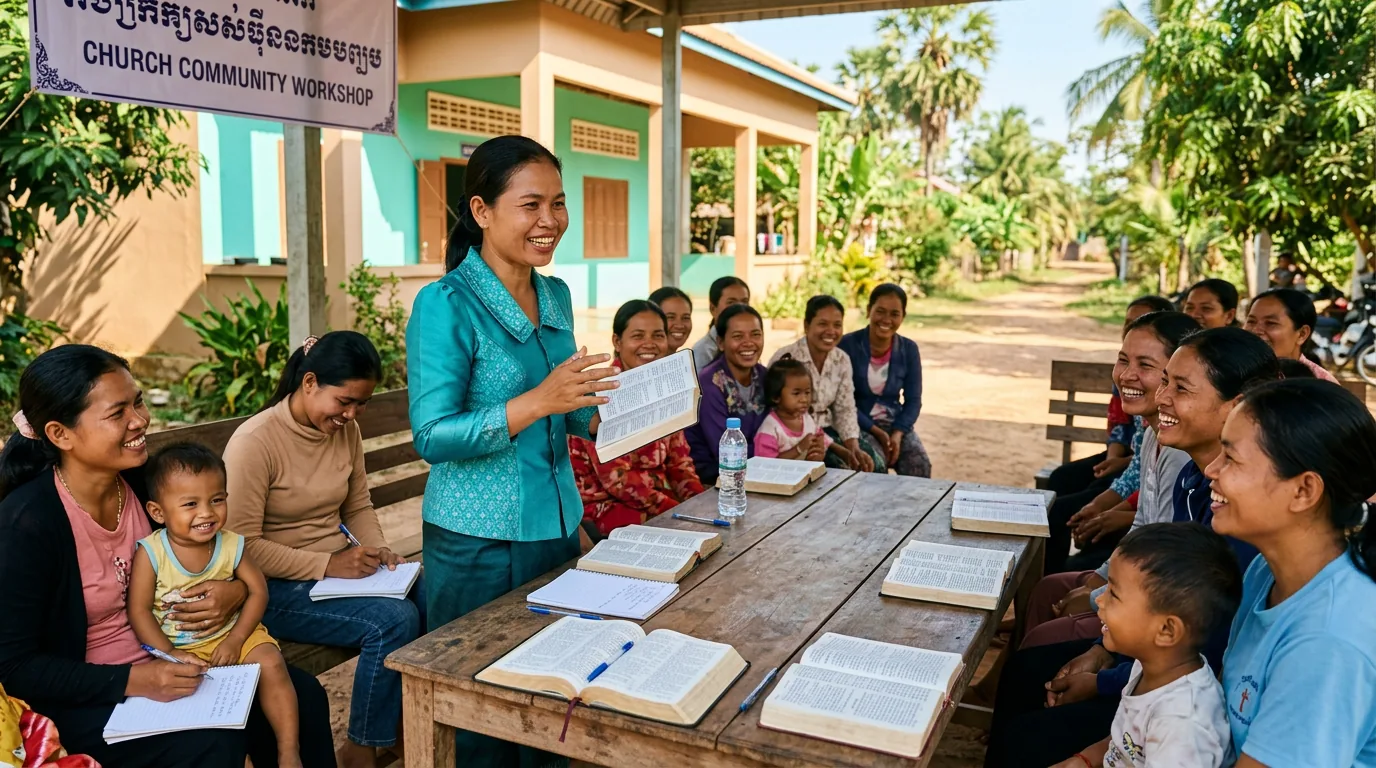
When I was three years old, I had no title, no power, and no family left to protect me. The years of Pol Pot took my mother and five of my brothers and sisters. My older sister and I walked for months along hard roads to find safety, and sickness left my body weak and deformed for the rest of my life. If you had met me then, a small orphan with nothing, you would never have called me a leader.
But God saw something else. In a small orphanage in Sihanoukville, missionaries opened a Bible and told me the story of Jesus, and my whole life turned toward Him. Today I help train Christian leaders across Cambodia. So when I write about leadership, I am not writing from a high seat. I am writing from the rice road, as someone God lifted up.
Here is the truth I want you to carry. Leadership in God’s family does not begin with a title. It begins with a heart that follows Jesus. This article gives you six marks of a leader who leads the Jesus way. Read them slowly. Count them on your fingers. They are for pastors and mothers, teachers and students, farmers and shopkeepers, anyone whose life is being watched and followed by even one other person.
The six marks are these. Build your character. Follow God’s plan. Serve your people. Stand with courage. Raise new leaders. Guard your heart.
What Christian Leadership Really Means
A teacher named John Maxwell has written more books on leadership than almost anyone alive. He says one sentence that is easy to remember. Leadership is influence. Influence means the way your life moves other people. A mother has influence over her children. A teacher has influence over students. A grandfather has influence over the whole family. You do not need a title to lead. If anyone is following your example, you are already a leader. The only question is where you are leading them.
Jesus set the standard on the last night before the cross. His disciples were arguing about who would be the greatest, and He answered them with words that turn the world upside down.

“Whoever desires to become great among you shall be your servant. And whoever of you desires to be first shall be slave of all. For even the Son of Man did not come to be served, but to serve, and to give His life a ransom for many.” (Mark 10:43 to 45)
In the world, the great person sits at the top and is served. In God’s family, the great person goes low and serves. Ken Blanchard spent years teaching leaders in business. After he gave his life to Christ, he wrote a book called Lead Like Jesus, and his message is simple. The finest leader who ever lived is Jesus, so copy His heart, His thinking, His hands, and His daily habits.
John MacArthur, a pastor who has trained leaders for many years, says the same thing in blunt words. In The Book on Leadership, he teaches that leadership is not a job title, not personality, and not charm. Real leadership grows out of character, and the truest leadership of all means service, sacrifice, and putting other people before yourself. Hear how these teachers agree with the Bible. They all point to the same Lord who picked up a towel and washed the feet of His friends.
“If I then, your Lord and Teacher, have washed your feet, you also ought to wash one another’s feet. For I have given you an example, that you should do as I have done to you.” (John 13:14 and 15)
That is the ground we stand on. Now let us count the six marks.
Mark One: Build Your Character
When a builder makes a house in our country, he does not start with the roof. He digs deep and lays a strong foundation in the ground. If the base is weak, the first heavy rain of the wet season will bring the whole house down. A leader is the same. The part no one can see, the character down deep, holds up everything that people can see.
God chose King David this way. The prophet Samuel came to find a king among the sons of Jesse. He looked at the tall, strong older brothers, sure that one of them must be the one. But God told him to look deeper.
“For man looks at the outward appearance, but the LORD looks at the heart.” (1 Samuel 16:7)
People look at the face, the clothes, and the title. God looks at the heart. David had been faithful with a few sheep long before God ever gave him a kingdom. He sang to God when no one was listening. That hidden faithfulness was the foundation of everything that came after. Be faithful in the small field, and God will trust you with a larger one.
Daniel teaches the same lesson from a foreign land. Carried far from home, surrounded by people who did not know God, he kept his honesty and his prayer life so clean that his enemies could find no fault in him at all. They had to invent a trap, because his real life gave them nothing to use.
J. Oswald Sanders led gospel work across Asia and wrote a classic book called Spiritual Leadership. He taught one truth we must not forget. Spiritual leadership is not made by natural talent or clever planning. It is made by God on the inside, through prayer, through obedience, and through a willingness to suffer for the gospel. Talent can put you in the seat. Only character will keep you there.
John MacArthur built his whole book on leadership around the Apostle Paul, and he agrees. Character, not style and not skill, is the true test of a godly leader. The first mark on his list is short and clear. A leader is trustworthy. People follow the leader they can trust. In another book, The John MacArthur Handbook of Effective Biblical Leadership, he points us to God’s own standard for a church leader.
“A bishop then must be blameless.” (1 Timothy 3:2)

The word bishop here means an overseer, a church leader. And blameless does not mean perfect. None of us is perfect. It means your life gives no one a true reason to accuse you. The Bible calls this being above reproach. So ask yourself today, where is God calling me to be faithful in the small and hidden places, where only He can see?
Mark Two: Follow God’s Plan
Think of a man who steers a boat on the Tonle Sap. Before he crosses, he reads the water, watches the sky, and listens to the older fishermen who know the lake. He does not trust his own feelings alone. A wise leader does the same. Before you move, find out what God is doing, and follow His current instead of your own.
Nehemiah shows us how. When he heard that the wall of Jerusalem lay broken and the people lived in shame, he did not rush ahead with his own big idea.
“I sat down and wept, and mourned for many days.” (Nehemiah 1:4)
He wept, he fasted, and he prayed before the God of heaven. Only after prayer did he plan, and only after planning did he lead the people to rebuild the wall in fifty two days. The work stood strong because it started on its knees. Many leaders fail because they plan first and pray last. Nehemiah teaches the right order. Pray first.
Moses learned the same lesson at the burning bush. He did not choose himself to lead. He felt weak and slow of speech, and he gave God many reasons why he was the wrong man. But God called him, and Moses followed God’s plan to set the people free. The plan was never Moses’ own. It belonged to God.
“Trust in the LORD with all your heart, and lean not on your own understanding.” (Proverbs 3:5)
“In all your ways acknowledge Him, and He shall direct your paths.” (Proverbs 3:6)
Henry Blackaby wrote a beloved book called Spiritual Leadership: Moving People on to God’s Agenda, and his teaching sets a tired leader free. Your task is not to dream up your own great plan and ask God to bless it. Your task is to find where God is already working, and join Him there. Then you bring the people with you, onto God’s plan, not your own. This lifts a heavy weight off your shoulders. The plan belongs to God. You only need to follow and obey.
Mark Three: Serve Your People
Think of a mother at the family meal. She cooks the rice. She serves her children and the guests first. She eats last, and she eats whatever is left. No one gave her a title, yet everyone in that home is following her love. That is leadership. The one who serves the most leads the deepest.
This is the heart of the foot washing we read earlier. On the last night, Jesus, the Lord and Teacher, took the towel of the lowest servant in the house and washed the dirty feet of His own disciples. The King of heaven did not lose His greatness by serving. He showed His greatness. He gave us an example to follow with our own hands.
Remember what John Maxwell taught. Leadership is influence. And the strongest influence of all is love that serves. A proud leader counts how many people serve him. A Jesus leader counts how many people he has served. Ken Blanchard tells us to copy the servant heart of Christ in everything we do.
William and Catherine Booth lived this out in England long ago. They started the Salvation Army, preaching the gospel while feeding the hungry, clothing the poor, and standing up for forgotten people. William Booth said he would fight for the hungry child, the prisoner, and the lost soul as long as he had breath. And take note of this. His wife Catherine Booth preached the gospel too, and she taught that women can and should serve and lead in the work of God. The Lord uses faithful women. I am living proof of that, and so are many women reading these words right now. Whose feet will you wash this week? Who in your home, your church, or your village needs you to kneel down and help them?
Mark Four: Stand With Courage
When the storms of the rainy season come, the small fishing boat must still go out, or the family does not eat. The brave captain feels the fear, yet he does not let it hold the boat at the shore. Courage is not the absence of fear. Courage is moving forward with God while you are still afraid.
John MacArthur points us to one of the finest leadership stories in the whole Bible, in Acts chapter 27, and your fishing families will feel this story in their bones. Paul was a prisoner in chains, carried by ship toward Rome. On that ship he was the lowest man of all. Not the captain. Not the soldier. A prisoner. Then a great storm came and did not stop for many days. The sailors lost all hope. They threw the cargo into the sea. They gave up.
But one man stayed calm, because he had been praying and God had spoken to him. That man was the prisoner, Paul. He stood up in the storm and told the men to take heart.
“Take heart, men, for I believe God.” (Acts 27:25)
He took the lead. He gave wise advice. He even told the hungry men to eat so they would have strength for what was ahead. By the end, the soldiers, the sailors, and the captain were all following the prisoner. MacArthur draws three clear lessons from this scene. A leader is trustworthy. A leader takes the initiative when others freeze in fear. A leader uses good judgment in a crisis. Paul held no title on that ship, yet he became the true leader because of his character and his calm faith in God.
The God who stood with Paul stands with you. He said the same words to Joshua when the task ahead looked far too big.
“Be strong and of good courage. Do not be afraid, nor be dismayed, for the LORD your God is with you wherever you go.” (Joshua 1:9)
Notice why Joshua could be brave. Not because he was strong, but because God was with him. The Bible is full of courageous women too. Deborah led the whole nation of Israel as a judge, and Barak, the commander of the army, would not even go into battle without her at his side. And young Esther walked into the king’s throne room to save her people, knowing it could cost her life. Her cousin gave her words that still call to us.
“Yet who knows whether you have come to the kingdom for such a time as this?” (Esther 4:14)
For such a time as this. God has placed you in Cambodia, in this year, in your family and your church, on purpose. Andy Stanley, who trains young leaders, teaches that courage is one of the marks every future leader must have, because the leader is often the first one to step forward. And Dietrich Bonhoeffer, a pastor in Germany, stood against an evil ruler and gave his very life for the truth. Cambodia has lived through many storms of its own. War, loss, hunger, and hard years that did not stop. In every storm, God still looks for a Paul. Someone with no title and no power, who has been with God, who stays calm, and who tells frightened people to take heart. Will you be that person in your storm?
Mark Five: Raise New Leaders
A wise rice farmer does not eat all of his harvest. He saves the best seed and plants it for the next season. If he eats everything now, his field stands empty next year. A leader is the same. The leader who keeps all the work and all the attention is eating the seed. The leader who trains other people is planting it. Which farmer do you want to be?
The Apostle Paul was a planter. He poured his life into a young man named Timothy, and he told Timothy to do the very same thing for others.
“And the things that you have heard from me among many witnesses, commit these to faithful men who will be able to teach others also.” (2 Timothy 2:2)
Count the layers in that one verse. Paul taught Timothy. Timothy must teach faithful people. Those faithful people must teach others also. That is four levels of leaders flowing from one man. This is how the gospel filled the ancient world, and it is how the gospel can fill Cambodia.
Even Moses had to learn this. He was trying to do everything alone, judging the people from morning until night, and he was wearing himself out. His father in law Jethro told him a hard truth. You cannot carry this alone. You will wear out, and so will the people. Choose trustworthy helpers, men who fear God, and give them real work to do. A leader who refuses to share the work is not strong. That leader is simply tired and alone. John Maxwell teaches the same lesson for our day. A leader who only grows followers stays small forever, but a leader who grows other leaders multiplies again and again.
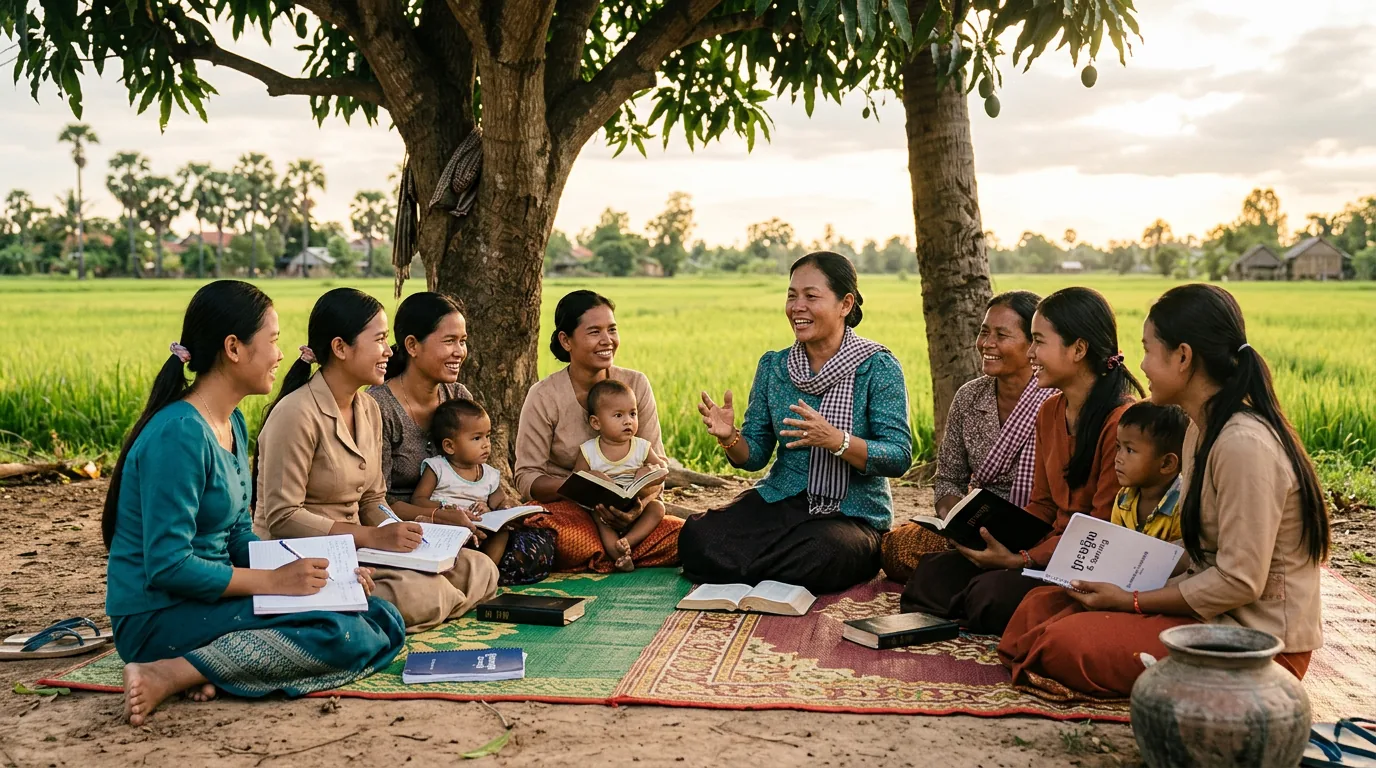
This is the work God gave to me. Through Haggai International and Kairos, and by helping put good Christian books into the hands of Cambodian leaders in their own heart language, I have spent my life raising up other leaders. I cannot reach every village myself. But the leaders I train can, and the leaders they train will reach further still. You can do this too. Find one young believer this year and pour your faith into them.
Mark Six: Guard Your Heart
A motorbike cannot run forever without fuel and without rest. Push the engine day and night with no oil and no stopping, and it will die on the road far from home. Many leaders treat their own hearts like that engine. They give and give and never refill, and one day they break down. A leader must care for their own soul, or they will not last for the long road.
The prophet Elijah learned this after a great victory. He grew so tired and afraid that he sat down under a tree and asked God to take his life. He was a mighty prophet, yet he was completely empty. What did God do for His exhausted servant? He did not scold him. God let him sleep. God gave him food. Then God spoke to him, not in wind or fire, but in a gentle, quiet whisper. God cared for the heart of His leader before He gave him any more work. Hear this clearly. Rest is not laziness. Rest is how God keeps His leaders alive.
Even the Lord Jesus made time to be alone with His Father.
“He went out and departed to a solitary place. And there He prayed.” (Mark 1:35)
If the Son of God woke early to pray in a quiet place, how much more do we need to do the same? Peter Scazzero nearly destroyed himself by overworking before he wrote The Emotionally Healthy Leader. He teaches one sentence every leader needs to hear. You cannot be spiritually mature while you stay emotionally immature. A leader who never faces their own anger, their own old wounds, and their own tiredness will end up hurting the very people they are trying to help. So guard your heart. Bring your real feelings honestly to God.
The world around us also keeps changing, and that takes a kind of courage too. Tod Bolsinger wrote a book called Canoeing the Mountains, where he describes leaders who arrive in places the old maps never showed. The methods that worked before may not work now. So a wise leader holds tightly to God, who never changes, while staying willing to learn new ways to reach new people. Be faithful to the old truth of the gospel. Stay flexible in the new methods you use to share it.
Live It Today
You have now counted the six marks. Build your character. Follow God’s plan. Serve your people. Stand with courage. Raise new leaders. Guard your heart. Six marks of a leader who follows Jesus.
I am not asking you to do all six this week. I am asking you to choose one. Pick the mark that God pressed on your heart as you read. Maybe you need fresh courage for a hard situation. Maybe you have been running empty and need to rest in God. Maybe there is a young believer near you who needs your time. Choose one mark, and take one small step this week. Write it down. Tell a friend so they can pray for you. Then begin.
And if you feel too small for any of this, please hear me one more time. I was an orphan with nothing and a body that did not grow the way it should. I had no title, no power, and no reason to hope. But God does not call the qualified. He qualifies the ones He calls. The same God who lifted me up from the rice road can use you, right where you are, for such a time as this.
You do not need a title to begin. If even one person is following your life, you are already leading them. So lead them toward Jesus. Build your life on Him, serve the people He puts in front of you, and watch what God will grow from one faithful seed.
If you would like to go deeper in your walk with Christ, or you want to learn more about following Jesus, visit my website at nalengreal.com. If you have a question, or you simply want someone to pray with you, you will find a way to reach me there. I would be honored to hear from you. Go now, friend, and lead the Jesus way.
Naleng Real serves in Phnom Penh, Cambodia. Orphaned at three and one of four siblings to survive the Pol Pot years, she went on to earn a Bachelor degree in English Literature at Norton University and a Master of Arts in Intercultural Studies from the East Asia School of Theology in Singapore. She has served since 1994 as a translator, interpreter, worship leader and trainer — nine years with the Assemblies of God and nine with World Vision International — and today works in church planting, Kairos facilitation and Bible translation.
All writing by Naleng →