Moses stood barefoot before a burning bush, terrified and full of excuses. Yet God called him to lead a nation out of slavery. Christian leadership has never been about charisma, talent, or natural authority. It is about a heart surrendered to God and a life shaped by His Word.
John MacArthur opens The Book on Leadership with a simple but piercing claim: leadership is influence, and every Christian leads someone. You may lead a small group, a family, a classroom, or a church plant. The question is not whether you lead. The question is what kind of leader you are becoming in the hands of Christ.
Let me walk you through the marks that define a good Christian leader, rooted in Scripture and sharpened by trusted evangelical voices.
Character Comes Before Skill
The Bible never separates leadership from character. When Paul wrote to Timothy about choosing elders, he listed character qualities first, not gifts or abilities. “A bishop then must be blameless, the husband of one wife, temperate, sober-minded, of good behavior, hospitable, able to teach” (1 Timothy 3:2).
Notice the order. Blameless living comes before teaching ability. MacArthur stresses this point in his Handbook of Effective Biblical Leadership. He argues that the church often inverts God’s order, promoting talented people who lack proven character. The result is broken ministries and wounded sheep.

Daniel was a young man in a pagan court, surrounded by pressure to compromise. Yet “an excellent spirit was in him” (Daniel 6:3). His enemies searched for fault and found none. That is the kind of integrity God uses.
Ask yourself a hard question today. If your private life were placed on display, would your leadership still stand?
A Servant’s Heart, Not a Title
Jesus shattered the world’s idea of leadership in one sentence. “Whoever desires to become great among you, let him be your servant” (Matthew 20:26). He did not say the servant is the lowest. He said the servant is the greatest.
On the night before His death, Jesus wrapped a towel around His waist and washed the feet of His disciples. The Lord of glory took the place of a household slave. That image must shape every Christian leader.
MacArthur often points out that worldly leaders use people to build their kingdoms. Biblical leaders pour themselves out to build God’s kingdom. The difference shows up in small moments. Who do you talk to after the service ends? Who do you make time for when no one is watching?
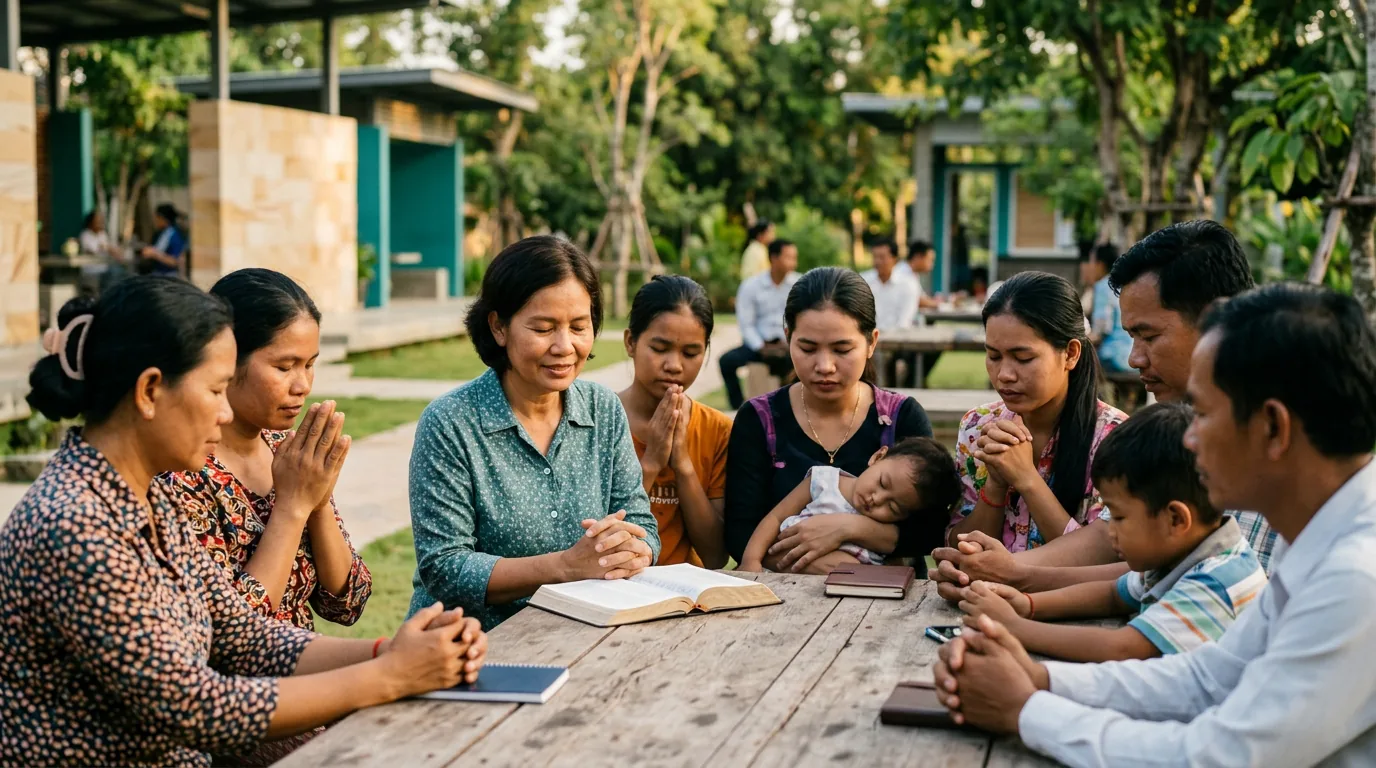
Paul described his ministry this way: “We were gentle among you, just as a nursing mother cherishes her own children” (1 Thessalonians 2:7). Gentleness, not dominance, marks Christ-shaped leaders.
Vision Anchored in God’s Word
A good Christian leader sees what others miss. Nehemiah heard about the broken walls of Jerusalem and wept. Then he prayed, planned, and acted. He inspected the ruins by night, gathered the people, and said, “Let us rise up and build” (Nehemiah 2:18).
That is biblical vision. It begins with prayer, listens to God, and moves people toward His purposes.

But vision must be anchored in Scripture, not personal ambition. MacArthur warns leaders against borrowing strategies from the business world and baptizing them with Christian language. The Bible is sufficient. It tells us what the church is, what the family should be, and how a leader must live.
If your vision cannot be traced back to the Word of God, it is not Christian vision. It is your own dream wearing religious clothes.
Courage to Stand Alone
Elijah stood on Mount Carmel against 450 prophets of Baal. Paul faced beatings, prison, and shipwrecks. Stephen looked into the faces of his murderers and saw Jesus standing in glory. Christian leadership requires courage.
You will face moments when truth is unpopular. You will be asked to soften the gospel, ignore sin, or follow the crowd. A faithful leader refuses.
Paul told Timothy, “For God has not given us a spirit of fear, but of power and of love and of a sound mind” (2 Timothy 1:7). Fear paralyzes leaders. The Holy Spirit empowers them.
In Cambodia and across the developing world, faithful pastors face real cost for preaching Christ. Yet they continue. Courage is not the absence of fear. It is faith that obeys God despite fear.
A Life of Prayer and Dependence
Jesus rose before dawn to pray. He spent whole nights in conversation with His Father. If the Son of God needed prayer, how much more do you?
MacArthur reminds leaders that prayerlessness is the silent killer of ministry. You can preach without prayer. You can organize, plan, and manage without prayer. But you cannot bear lasting spiritual fruit without prayer.
The early apostles understood this. When the church grew and problems multiplied, they did not abandon prayer for administration. They said, “We will give ourselves continually to prayer and to the ministry of the word” (Acts 6:4). That order matters. Prayer first. Then the Word. Then the work.
Teaching and Guarding Sound Doctrine
A Christian leader is a shepherd, and shepherds protect the flock. Paul warned the Ephesian elders, “For I know this, that after my departure savage wolves will come in among you, not sparing the flock” (Acts 20:29).
You cannot guard what you do not know. So a faithful leader studies. You read the Bible deeply. You think carefully about what it means. You teach it accurately to others.
This is why Paul told Timothy, “Be diligent to present yourself approved to God, a worker who does not need to be ashamed, rightly dividing the word of truth” (2 Timothy 2:15). Sloppy handling of Scripture produces sloppy disciples.
Live It Today
Leadership grows through daily choices. Here are practical steps you can take starting now.
Examine your character before the Lord this week
Set aside 30 minutes. Read 1 Timothy 3:1-7 slowly. Write down each character quality. Ask the Holy Spirit to show you where you are growing and where you are weak. Confess what He reveals.
Serve someone no one notices
Find one person this week who cannot benefit your ministry in any way. Make them coffee. Visit their home. Listen to their story. Practice the towel and basin leadership of Jesus.
Build a daily prayer rhythm
Choose a fixed time and place to meet with God every morning. Start with 15 minutes. Pray for your family, your church, your community, and your own heart. Do not skip it for emails or social media.
Study one book of the Bible deeply
Pick a short book like Philippians or 1 Peter. Read it through every day for 30 days. Take notes. Ask questions. Let the text shape your thinking before you try to teach it.
Confront one area where you have avoided courage
Where have you stayed silent when you should have spoken? Where have you avoided a hard conversation? Pray for boldness, then act in love and truth.
Christian leadership is not reserved for famous pastors or trained scholars. It begins in your home, your workplace, and your local church. The Lord is looking for faithful servants who will follow Jesus closely and lead others to do the same.
If you want to discuss your faith journey or have questions about Christ, reach out to Naleng Real at nalengreal.com. You can also discover more Christian resources to grow your faith at https://unboundedknowledge.org.
Naleng Real serves in Phnom Penh, Cambodia. Orphaned at three and one of four siblings to survive the Pol Pot years, she went on to earn a Bachelor degree in English Literature at Norton University and a Master of Arts in Intercultural Studies from the East Asia School of Theology in Singapore. She has served since 1994 as a translator, interpreter, worship leader and trainer — nine years with the Assemblies of God and nine with World Vision International — and today works in church planting, Kairos facilitation and Bible translation.
All writing by Naleng →